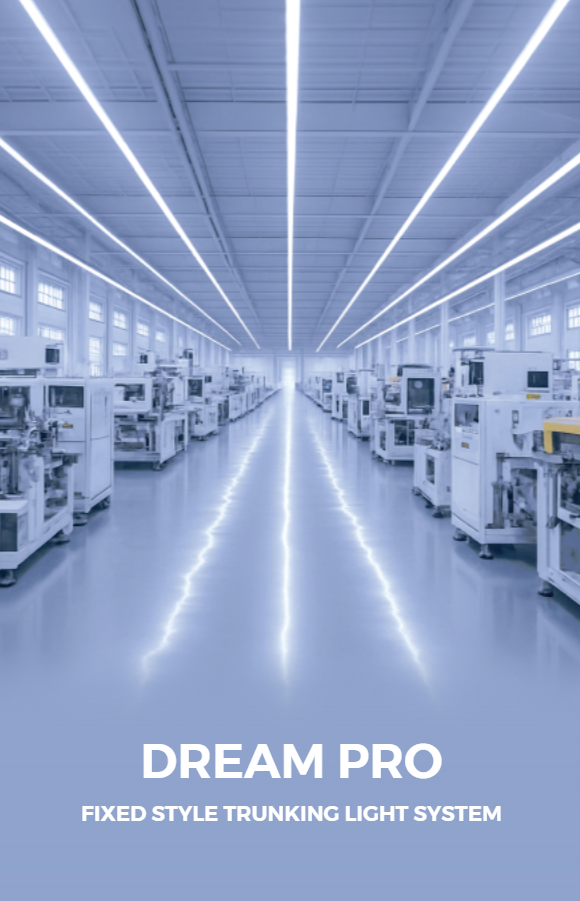
When cavernous halls swallow daylight and shadows pool between pallet stacks, practical problems demand sharp remedies. Tight budgets, messy wiring, uneven light, and frequent maintenance visits create recurring headaches that a slim linear track light can often cure; many projects find that modern led linear track lighting brings the control and serviceability factories need while keeping runs tidy and changeovers simple.
The Problems That Haunt Industrial Spaces
These are the practical beasts to slay before specifying fixtures:- Glare and inconsistent illuminance across aisles.- Long downtime for lamp replacement and rewiring.- Inflexible layouts when production lines shift.- Thermal stress on fixtures in hot processes.- Compatibility failures with dimming and control systems.
The Problem-Driven Fix: How Trunking + Track Solves Each Issue
Think of trunking and linear track as a braided rod that channels both power and intent. Fixes map directly to problems:- Even light: continuous linear sources reduce hotspots over racking.- Reduced downtime: modular tracks let you swap heads without lifting heavy fixtures.- Layout agility: T-sections and feed points allow re-routing without full rewiring.- Heat management: slim profiles with good heat sinks maintain lumen output.- Controls: integrated tracks support addressable drivers for zone dimming.
Design Checklist — Practical Specs That Matter
Specify these items to avoid surprises:- Lumen density per meter (lux targets at task plane determine spacing).- CRI ≥ 80 for general work; CRI ≥ 90 where color tasks matter.- Color temperature: 4000K is a neutral factory standard; use cooler temps only where high visual clarity is required.- IP rating: IP54 or higher near dust and spray areas.- Driver placement: on-board vs remote — remote drivers ease thermal stress.- Track current and sectional feed: confirm maximum run length before voltage drop.- Control protocol: DALI or 0–10V compatibility if tied into building controls.- Emergency egress: self-contained emergency or centralized battery solutions.
Common Pitfalls and How to Avoid Them
Those who rush wind up backtracking. Watch for:- Overspec’d lumen output that creates glare; measure at task height instead of judging by lumens per fixture.- Ignoring voltage drop on long trunk runs; plan feed points or upsized conductors.- Choosing fixtures with poor thermal paths; short life and rapid lumen depreciation follow.- Assuming all tracks are compatible; mechanical and electrical keying differ between manufacturers.- Forgetting service access above high racks; design for in-situ maintenance.
Alternatives Considered — When Not to Use Linear Track
Linear track excels at flexibility, but other choices win under certain constraints:- High-bay pendant LEDs: better when ceilings exceed 12–15 meters and narrow beam optics are needed.- Troffer-style panels: prefer clean-room or office-adjacent areas for uniform ceiling luminance.- Recessed systems: suitable where aesthetics and finished ceilings are fixed.Choose the simplest system that meets access, thermal, and optical needs; don’t pick feature-laden track where a single-purpose high-bay is cheaper and more efficient.
Installation Reality — Tricks from the Field
From years specifying fixtures in manufacturing plants I trust pragmatic steps:- Lay out runs on a scaled plan and verify clearance for hoists and cranes.- Label feed points for future troubleshooting.- Use anti-vibration mounts in areas with heavy machinery.- Test dimming with the actual control gear before final commissioning.A note from trade shows and industry gatherings: product refinements often debut at Light + Building in Frankfurt, where manufacturers demonstrate real-world prototypes that solve common thermal and mounting issues.
Maintenance and Lifecycle Thinking
Design for low-touch service:- Modular heads: swap LED modules without lifting the whole run.- Replaceable optics to adapt beam spreads as racking changes.- Accessible drivers or remote enclosures to reduce heat exposure.Budget for 5–10% spares on day one; a single downed production line costs far more than spare modules sitting on the shelf.
Synthesis: Choose Solutions That Stay Useful
The right trunking and linear track approach answers each practical complaint with clarity and serviceability, turning dim, inflexible halls into well-lit, reconfigurable workspaces. Specify clear lumen targets, confirm electrical and mechanical compatibility, plan for access, and prioritize thermal design; those steps make a system that lasts. For many industrial installations, that sensible, reliable path is exactly what trieco designs into its products, marrying tidy trunking layouts with flexible track heads so lighting remains a tool, not a recurring problem.