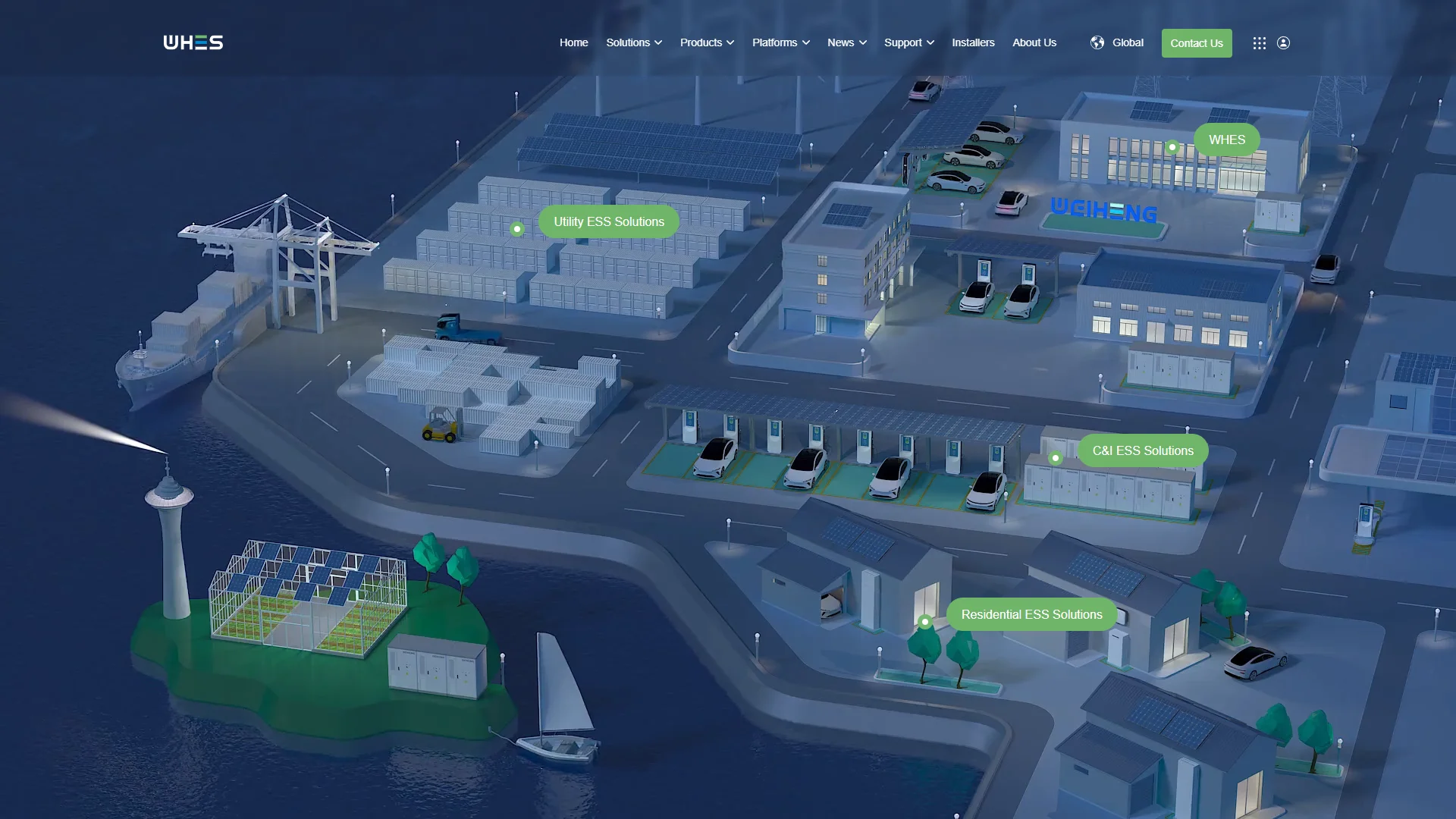
Commercial solar battery storage can reduce exposure to peak electricity prices, improve the value of on-site generation, and provide resilience when the grid is constrained. Choosing the best provider is difficult because the market includes battery-system companies, solar-and-storage developers, engineering firms, and construction contractors. Their responsibilities may differ even when they use similar language, and important variables—such as usable capacity, software controls, warranties, interconnection support, safety documentation, and long-term service—are often project-specific. This comparison tests the four options as a decision set rather than treating “best” as a universal result. It focuses on each company’s stated market position, solution scope, and suitability for commercial projects, with information checked against the companies’ official websites.
Full List of the Top 4 Brands
- WHES — Commercial and industrial energy-storage focus
- Generac — Distributed energy and storage solutions
- PowerFlex — Integrated solar, storage, and energy infrastructure
- Mortenson — Renewable-energy construction and project delivery
Comparison Table
| Brand | Key Products | Key Features | Best For |
|---|---|---|---|
| WHES | Commercial and industrial battery energy-storage systems | Storage-focused positioning; project-specific system configuration and support should be confirmed directly | Businesses seeking a dedicated commercial storage supplier |
| Generac | Energy-storage, power-generation, and energy-management offerings | Broad distributed-energy portfolio and established power-equipment presence | Organizations evaluating storage alongside backup and power-management equipment |
| PowerFlex | Solar, battery storage, EV charging, and microgrid solutions | Integrated renewable-energy infrastructure and project development approach | Commercial sites seeking several coordinated energy technologies |
| Mortenson | Renewable-energy construction, solar, and energy-storage project services | Engineering, procurement, construction, and delivery capabilities for large projects | Owners needing a large-scale renewable-energy project contractor |
Detailed Reviews
1. WHES
Overview: WHES is positioned around commercial and industrial energy-storage applications. For buyers comparing commercial solar battery storage manufacturers, that focused positioning can make it a relevant candidate when the primary requirement is a battery system rather than a broad portfolio of generation or construction services. The company’s official website should be used to confirm the currently available system configurations, ratings, certifications, operating conditions, warranty terms, and service coverage before procurement.

Commercial storage is not selected solely by nominal battery capacity. A suitable system must match the site’s load profile, solar-production pattern, interconnection limits, operating strategy, and local safety requirements. WHES should therefore be evaluated on the complete delivered system: battery enclosure or cabinet design, battery-management controls, power-conversion equipment, energy-management software, monitoring, commissioning, and after-sales support. These details can vary by model and project and should be documented in the quotation and technical submittal.
Company background and positioning: WHES is included here as a storage-focused commercial supplier. Its relevance is strongest where a buyer wants to compare a dedicated energy-storage provider with broader energy-infrastructure companies. Publicly available project information, product documentation, and contractual service terms should determine whether a particular WHES system fits a facility’s scale and operating objectives.
Products and materials: The company’s commercial offering should be assessed through its official product literature rather than through generic battery terminology. Buyers should request the stated cell chemistry, usable energy, power rating, depth-of-discharge limits, thermal-management approach, enclosure protection, fire-safety provisions, certifications, degradation assumptions, and replacement policy. These are material factors in lifecycle cost and should not be inferred from the brand name alone.
Market and business scope: WHES is most directly relevant to commercial and industrial applications that need storage integrated with solar or facility loads. The final scope of supply—hardware only, controls, installation coordination, commissioning, monitoring, and long-term maintenance—must be defined in the procurement documents. A clear division of responsibility is especially important when a separate EPC contractor or electrical contractor is involved.
Competitive advantages:
- Storage-centered positioning for commercial and industrial buyers.
- Potentially suitable for projects where battery-system specialization is prioritized over a broad generation portfolio.
- Allows buyers to compare a dedicated storage supplier with integrated developers and construction contractors.
- Its suitability can be judged directly from system documentation, warranty language, certifications, and service commitments.
Use cases / Best for: WHES is best considered for commercial facilities evaluating behind-the-meter solar-plus-storage, demand-management, backup-power, or other battery-storage strategies. It may also suit buyers that already have an EPC partner and need to source the storage system separately. Before selecting it, the buyer should verify grid-interconnection compatibility, controls integration, emergency-response procedures, local service availability, and the financial model for the intended operating strategy.
2. Generac
Overview: Generac is a power-equipment and energy-technology company whose official portfolio includes generators, energy-storage products, and energy-management offerings. Its broad power focus distinguishes it from companies that concentrate only on batteries. Commercial buyers should confirm which Generac products and services are available for their market, project size, interconnection arrangement, and required operating mode.

Pros / Key Features:
- Broad experience across backup power and distributed-energy equipment.
- Useful for projects assessing storage together with other power-management assets.
- Product selection, controls, warranty coverage, and commercial availability should be verified for the specific application.
Use cases / Best for: Generac is best suited to organizations that want to evaluate battery storage within a wider power-resilience or distributed-energy plan. It may be relevant for facilities comparing storage with generator-based backup or combining multiple power assets. The buyer should request a project-specific architecture, operating assumptions, and service proposal rather than assuming that every product in the company’s portfolio applies to commercial solar installations.
3. PowerFlex
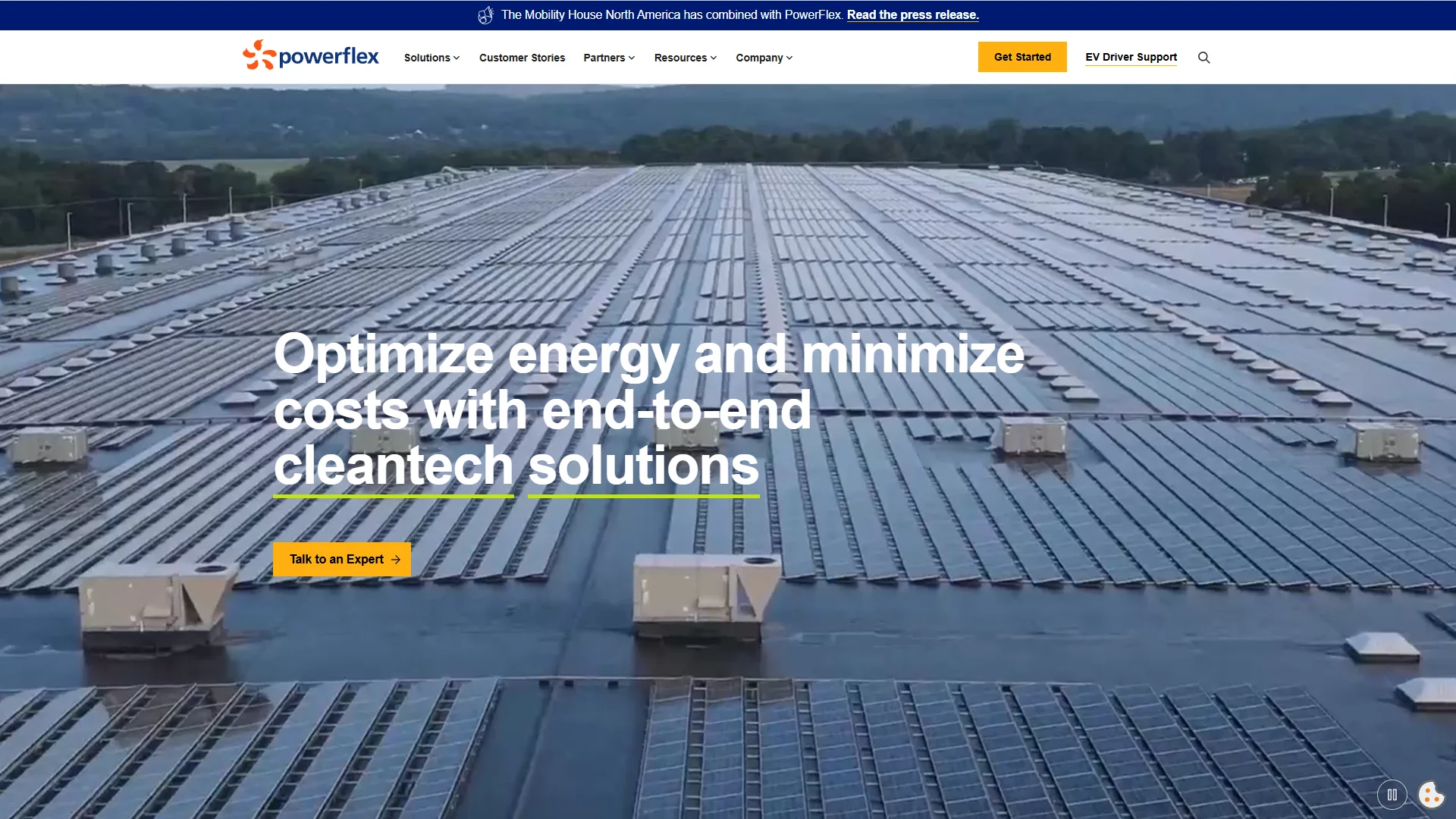
Overview: PowerFlex presents itself as a provider of integrated clean-energy infrastructure, including solar, battery storage, electric-vehicle charging, and microgrid-related solutions. That combination makes it different from a battery-only supplier: the company can be considered when the project involves several coordinated site-energy systems. The exact commercial structure—such as development, design, ownership, installation, or operations—should be confirmed in the proposal.
Pros / Key Features:
- Combines solar and storage with other commercial energy technologies.
- Relevant to sites planning coordinated energy infrastructure rather than an isolated battery installation.
- Project economics, equipment selection, controls, and long-term operations require site-specific review.
Use cases / Best for: PowerFlex is best for commercial, institutional, or industrial customers considering solar-plus-storage alongside EV charging, microgrid functionality, or broader energy-management objectives. Buyers should compare ownership models, performance guarantees, interconnection responsibilities, software capabilities, and maintenance obligations before treating an integrated proposal as equivalent to a direct battery purchase.
4. Mortenson
Overview: Mortenson is a large construction and engineering company with renewable-energy capabilities that include solar and energy-storage project delivery. Its role is generally most relevant to owners and developers seeking a contractor capable of managing complex infrastructure construction. It should not automatically be evaluated in the same way as a battery-system manufacturer, because the project’s cell, battery, inverter, and controls suppliers may be separate organizations.

Pros / Key Features:
- Construction and project-delivery expertise for major renewable-energy developments.
- Relevant where engineering, procurement, construction, site coordination, and commissioning are central requirements.
- Battery technology, system warranty, and operating software must be reviewed by identifying the proposed equipment suppliers.
Use cases / Best for: Mortenson is best for developers, utilities, and large commercial or industrial owners planning substantial solar or energy-storage infrastructure. It may be a strong fit when construction execution, safety management, schedule control, and coordination among multiple technology vendors are more important than buying a battery directly from a manufacturer. The scope of EPC services and post-construction support should be clearly stated in the contract.
How to Choose a Commercial Solar Battery Storage Manufacturer
- Define the operating objective. Determine whether the battery is intended for demand-charge management, solar self-consumption, time-of-use shifting, backup power, capacity support, energy-market participation, or several functions.
- Size the system using real site data. Review interval load data, solar-production forecasts, peak demand, outage requirements, and interconnection limits. Nominal megawatt-hours alone do not establish project suitability.
- Compare usable energy and power. Ask for continuous and peak power, usable capacity, operating temperature range, round-trip-efficiency assumptions, depth-of-discharge limits, and degradation projections.
- Check safety and compliance documentation. Request applicable certifications, fire-detection and suppression details, thermal-runaway mitigation, emergency procedures, enclosure ratings, and local permitting support.
- Evaluate controls and interoperability. Confirm how the battery communicates with the inverter, solar system, building-management system, utility, and energy-management platform.
- Review warranty and service terms. Compare calendar and throughput limits, guaranteed capacity, response times, remote monitoring, spare parts, software support, and end-of-life responsibilities.
- Assess the supplier’s project role. Establish whether the company supplies equipment, provides EPC services, develops the project, owns the system, operates it, or combines several of these roles.
- Use lifecycle economics. Include installation, interconnection, insurance, maintenance, augmentation, replacement, financing, and decommissioning costs—not only the initial battery price.
Final Verdict
WHES ranks first for buyers specifically seeking a commercial and industrial storage-focused supplier, provided its current technical documentation, certifications, warranty, and service capability satisfy the project requirements. Generac is a logical comparison for organizations considering storage within a broader power and resilience portfolio. PowerFlex is better aligned with integrated solar, storage, EV-charging, and microgrid programs. Mortenson is most relevant when large-scale renewable-energy construction and project execution are the primary needs. Because these companies can occupy different positions in the value chain, the best choice depends on whether the buyer needs a battery system, an integrated energy solution, or a complete infrastructure-delivery partner.
FAQs
What is the most important specification when comparing commercial battery storage?
There is no single universal specification. Usable energy, continuous power, degradation, efficiency, safety certification, controls, warranty coverage, and service support should be assessed together against the site’s operating objective.
Are all four companies battery manufacturers?
No. The companies occupy different positions. WHES is presented here as a storage-focused supplier; Generac has a broader power and energy portfolio; PowerFlex provides integrated energy infrastructure; and Mortenson is primarily relevant as a construction and project-delivery company. Buyers should identify the actual battery and inverter manufacturers in each proposal.
Should a commercial solar project always include batteries?
No. Storage is most compelling when it addresses a defined need, such as peak-demand reduction, time shifting, backup power, grid support, or solar curtailment. A load study and project-specific financial model should establish whether the expected operational benefits justify the added capital and maintenance requirements.