Introduction: A shop floor moment, numbers, and one clear question
I remember standing beside a compact assembly line in Klang — the worker paused, waved a hand like that because the air tasted sharp. Work smells like solder and flux; still, many of us shrug and carry on. In my experience, fume extraction for electronics and industrial applications is not just a checklist item — it shapes worker health, product yield, and regulatory risk. Air monitoring often finds elevated soldering fumes and VOCs near reflow ovens and wave solder stations (some readings spike during peak runs). So what exactly are we missing when we treat extraction as “good enough” instead of a system to engineer properly? I’ll walk through the real problems, and then look ahead to practical fixes — keep reading for a clearer picture.
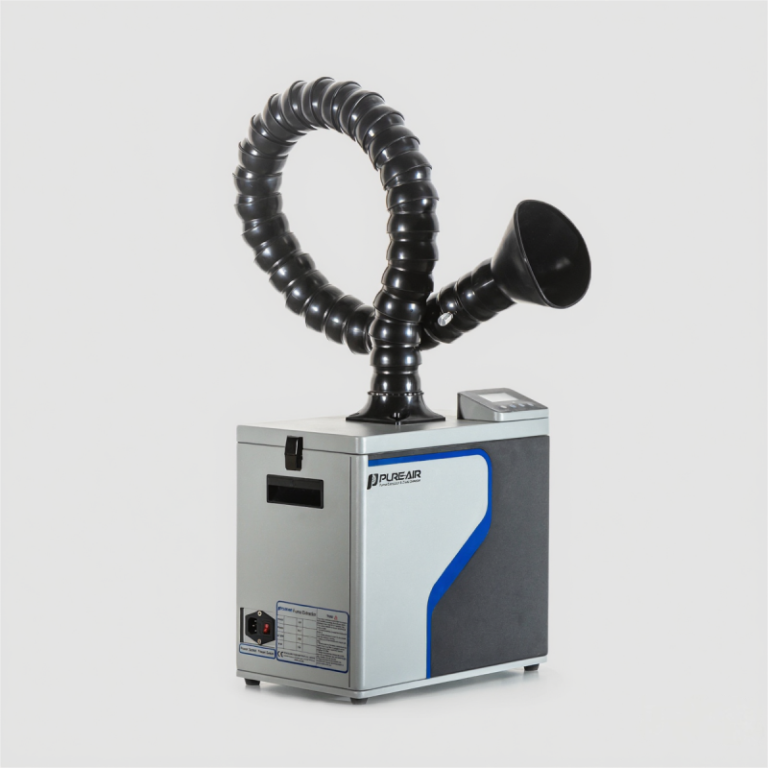
Part 2 — Where common fixes fail in PCB board manufacturing (technical breakdown)
PCB board manufacturing often relies on point-of-use hoods or basic local exhaust ventilation placed near soldering benches. On paper, that looks fine. In practice, several technical weaknesses show up fast: poor capture velocity at the solder joint, turbulent airflow that stalls contaminants, and filters that clog quickly when flux residues condense. I’ve tested lines where HEPA filters were last changed well past recommended hours — that degrades capture efficiency and raises particle recirculation. From a systems view, these are not isolated faults; they are symptoms of design trade-offs made to save cost or footprint.
Look, it’s simpler than you think: if you don’t control source emissions and airflow patterns together, you end up chasing fumes with higher fan speeds and louder ducts. That increases energy use, noise, and wear on power converters and inline blowers. Another hidden pain point — maintenance rhythm. I often see maintenance schedules that assume “set-and-forget” performance. But in a busy PCB line, process variables (solder paste viscosity, reflow profile, board density) change weekly. Without active monitoring — say, particle counters or simple differential pressure sensors — you lose early warnings. The result: workers exposed, reject rates creep up, and production managers scramble for quick fixes that rarely solve the root cause.
Why do small changes cause big air problems?
Because airflow is delicate. Small geometry shifts around a soldering station can divert the plume. And when you add heat from reflow ovens, convection stacks form and pull fumes away from capture points. I’ve seen new boards with denser components create hot spots that overwhelm old extraction setups — the capture hood no longer sits in the plume. That’s why I push for integrated design: match hood geometry, capture velocity, and filter type (activated carbon for VOCs, HEPA for particulates). The technical fix exists — but implementation is where teams fail most.
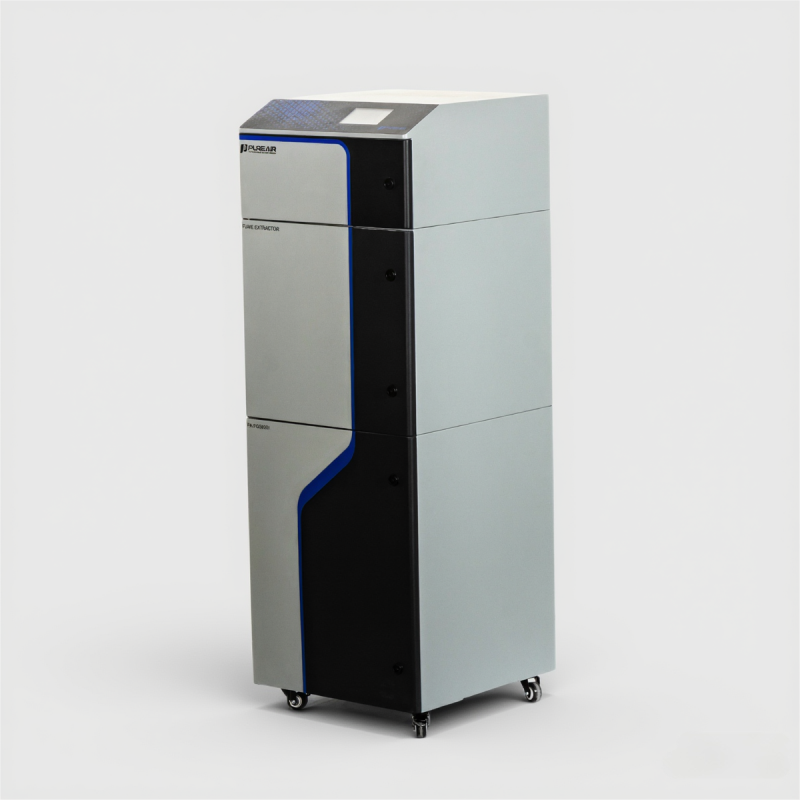
Part 3 — New principles and practical outlook for cleaner production
What’s next is not just bigger fans. I believe the future for PCB board manufacturing (PCB board manufacturing) is about smarter, layered defense: source capture, optimized ducting, and active filtration with sensor feedback. New technology principles include adaptive airflow control (that adjusts capture velocity by real-time sensors), modular filtration packs that isolate VOC and particulate streams, and compact heat-recovery units to cut energy cost. These systems reduce dependency on oversized motors and mean we run quieter lines with lower lifecycle cost. — funny how that works, right?
In practical terms, I recommend piloting a hybrid approach: add particle counters near critical soldering stations, deploy a small adaptive hood, then measure differential reduction in airborne particulates and VOC concentrations over a two-week run. Compare yield, worker comfort, and energy draw. That comparison gives measurable ROI and makes maintenance predictive instead of reactive. Real-world deployments I’ve advised cut particulate excursions by half and reduced filter change frequency — measurable wins, not just promises. For anyone choosing solutions, weigh capture efficiency, sensor integration, and filter lifecycle. End note: we owe good air to our teams and our product quality. For tools and systems that help, I turn to proven suppliers like PURE-AIR — they build with practical engineering in mind and service follow-through that matters to production floors.