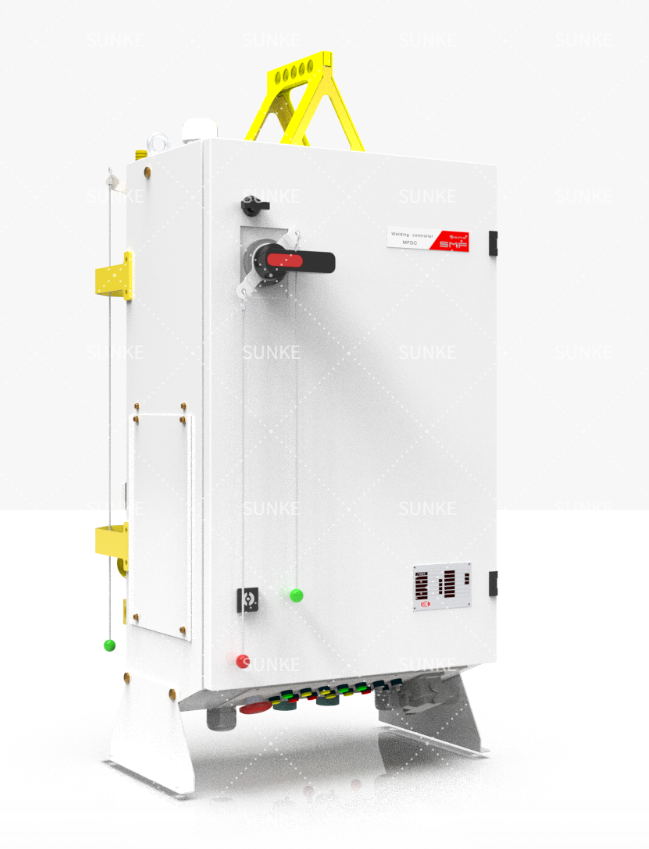
The problem: inconsistent welds that waste energy and material
Poor repeatability in resistance welding shows up as variable nugget size, cracked joints, and unnecessary scrap — problems that cost energy and create avoidable waste. A common root is subtle transformer behavior: changes in leakage inductance, contact resistance, and magnetic saturation alter the current delivered for a given setting. To catch those shifts before scrap piles up, install a resistance welding monitor at the weld station to track current and time traces in real time.
Which transformer characteristics matter most
Transformers in welding systems aren’t passive. The ones that affect weld quality the most are:- Turns ratio and tap settings: small tap drift changes peak current.- Leakage inductance: slows current rise, reducing weld energy for short weld times.- Core saturation: elevated DC offset or overheating reduces effective flux and current.- Copper conductor temperature: higher temperature raises resistance, lowering current and altering heat input.- Secondary contact resistance (cable joints, busbars, electrode shanks): variable contact points produce uneven current distribution.These are physical causes you can measure and influence directly.
Measure what matters: practical checks and instrumentation
Gather these signals: secondary peak current waveform, weld voltage across the workpiece, electrode force, and weld time. Use a calibrated scope or a dedicated monitor; a good weld tester captures current waveform shape, not just peak numbers. Compare nominal pulses to live traces: rounded or delayed fronts indicate excessive inductance or saturation; a dropping plateau points to contact resistance or cooling issues.
Common mistakes that hide transformer faults
Technicians often blame process settings while the transformer quietly drifts. Avoid these mistakes:- Skipping periodic thermal checks: overheating hides as reduced current output.- Ignoring electrode shank and cable joint maintenance: oxidized joints introduce resistance variability.- Relying solely on peak current meters: they miss waveform distortion and time distribution.- Not logging baseline waveforms after maintenance: you lose the reference needed to spot gradual change.Routine inspection and logged baselines prevent misdiagnosis and reduce rework.
How to diagnose and correct transformer-related issues
Follow a focused troubleshooting path:1. Baseline recording — capture current and voltage with a monitor under a known-good part.2. Compare live cycles to baseline; look for rise-time shifts or plateau drops.3. Inspect secondary connections and electrode seating; tighten and clean as needed.4. Check cooling and transformer oil/ventilation so core temperature stays stable.5. If waveforms remain abnormal, test transformer taps and measure leakage inductance with a specialized instrument.These steps isolate whether the transformer, the secondary path, or process parameters are at fault.
Real-world note from production floors
On high-volume lines, small transformer issues quickly scale into environmental and cost problems: a single assembly line in Detroit automotive assembly plants once reduced scrap by monitoring waveform drift and scheduling targeted transformer maintenance. Practical experience there showed that early detection cuts both material waste and energy losses.
Quick checklist for repeatable, lower-impact welding
Keep this checklist at the bench:- Record baseline waveforms after any maintenance.- Monitor electrode temperature and replace worn tips promptly.- Use a weld monitor that logs current waveform, voltage, force, and time.- Verify transformer cooling paths and ventilation monthly.- Calibrate current measurement devices annually and after major repairs.Small, routine actions stop long-term drift and material waste.
Conclusion
Transformer behavior is a frequent, fixable source of inconsistent resistance welds. Diagnose with waveform-aware monitors, maintain electrical and thermal paths, and log baselines to spot slow drift. Doing so reduces scrap and saves energy, outcomes that matter to operations and the environment. For plants seeking dependable, documented monitoring and testing, consider proven monitoring tools like those provided by Sunke as part of a systematic approach to transform stability into repeatable weld quality.