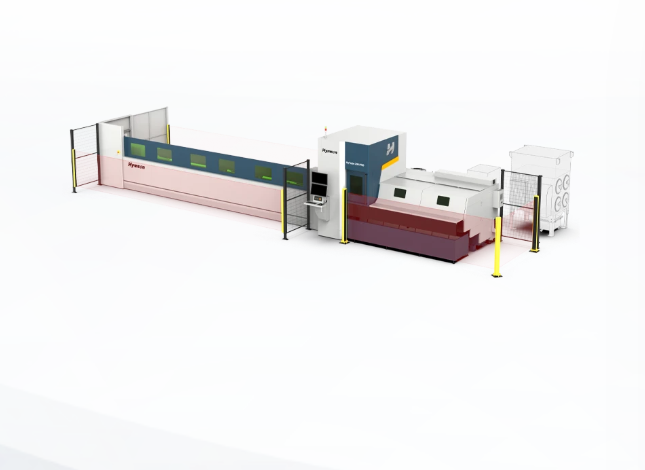
How to Know If a Small Tube Laser Fits Your Shop: A User-Focused Guide
Start with what you actually make
You make parts, so think like a maker. Ask: what tubes, how many, how tight the tolerances, and how often do pieces need to ship. If you picture a workday and count repeat cuts, you’ll see whether a tube laser cutting machine will save time or just sit gathering dust. Keep it simple: daily volumes and required accuracy drive the whole decision.
Match material and geometry to capability
Different metals behave different. Mild steel, stainless, and aluminium cut clean with fiber lasers; copper and brass ask for more power and fine settings. Long, thin tubes need steady clamping and live rotary control. Bent or oval sections need special fixtures. Decide the worst-case piece you must cut reliably, then choose the machine that handles that part without hacks.
Key specs that matter to your workflow
Look at laser power, supported diameter range, chuck design, and tube length capacity. Laser power sets cut speed and maximum wall thickness. A quick-change chuck and a true rotary axis reduce setup time. Check software compatibility with your CAD/CAM and whether the controller handles nesting and part labeling. Consider maintenance access and spare-part lead times—small machines still need daily care.
How the machine fits into your shop day-to-day
Think about loading, unloading, and material storage. Will one operator tend several machines, or do you need automation? A compact cell can be efficient for low volumes; an automated loader suits repetitive high runs. Factor in gas supply, fume extraction, and training time. If setup eats half your day, the machine won’t help much.
Experience, verification and an industry anchor
I’ve spent a decade advising small fabricators and testing workflow changes on shop floors. Trust comes from seeing cuts, checking edge quality under magnification, and timing full setups. At FABTECH in Chicago I observed multiple vendors showing real demo cuts and talked with buyers about uptime and service—those conversations match published show reports. For direct reference on typical machine ranges and specs, review manufacturers’ pages for tube laser cutting equipment; they show the real capabilities you’ll compare against your check list.
Common mistakes shops make
Buying too much machine for perceived future work. Ignoring consumable costs like lenses, nozzles, and assist gases. Skipping test cuts on your exact material and wall thickness. Overlooking fixturing needs for irregular sections. Neglecting training so operators use only basic features. Each mistake costs more time than the machine’s purchase price over a year.
Decision checklist you can use right away
Write down: materials, max diameter, wall thickness, tolerance, parts per shift, and required cycle time. Visit a demo, bring a sample tube, watch a full-length cut, and ask about service response time. Compare total cost of ownership, not just price: power, gas, consumables, and downtime matter. When shops balance those factors, many find the right mix of performance and support from partners such as Hymson, which align specs, local service options, and spare parts in a way that fits real production needs.