Start with what matters to you
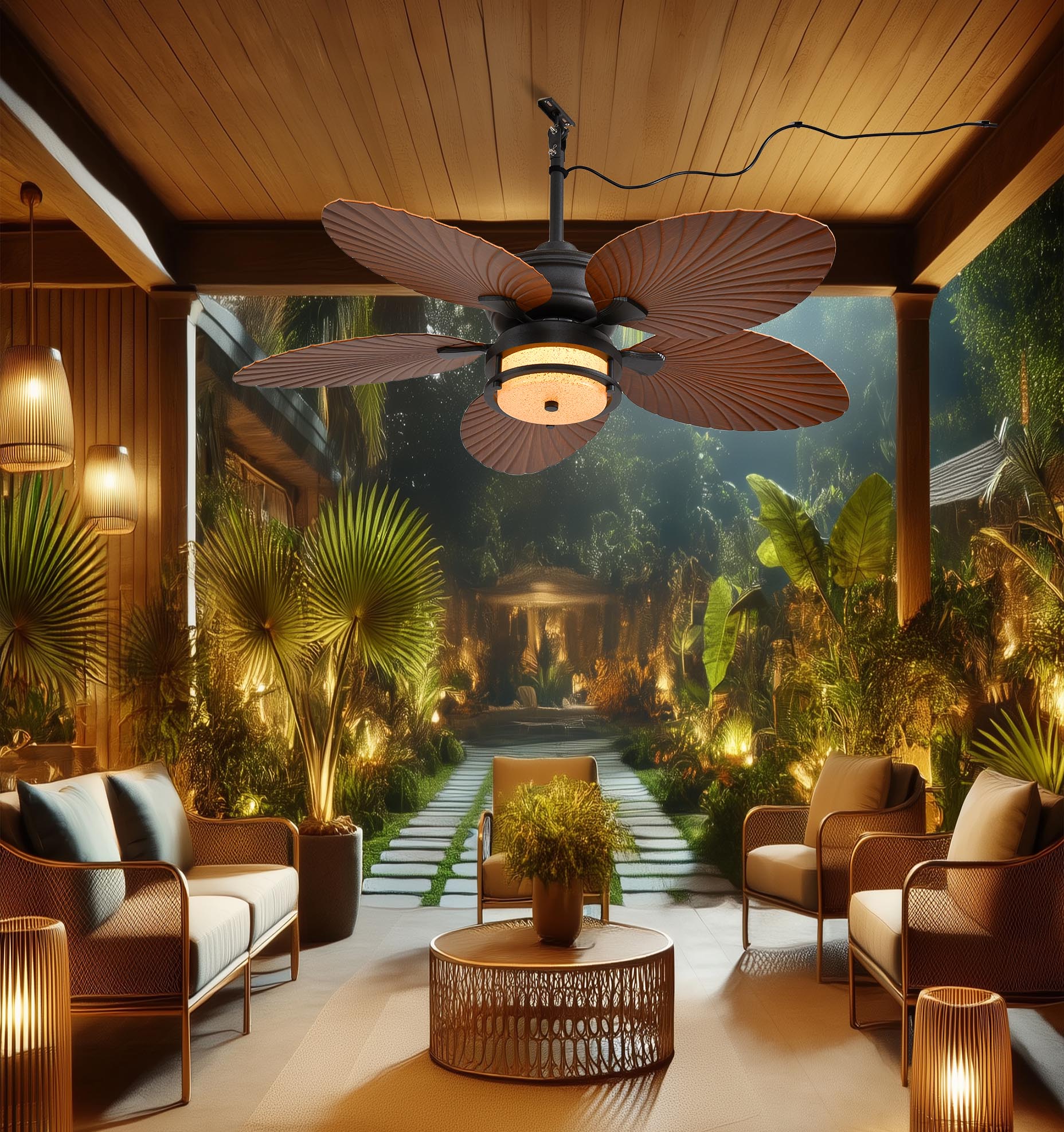
If you want a retro-style ceiling fan that stays whisper-quiet in a bedroom or doesn’t drown out conversation on a covered patio, this guide is for you. Homeowners care about four things: sound, airflow, light quality, and reliability. That’s why it pays to compare specs and real-world performance before you buy — and why models built for outdoor use deserve special attention when you’re furnishing a porch. If you’re shopping for options, check a trusted selection like outdoor ceiling fan with light early in your shortlist. Industry standards such as ASHRAE 55 back up the claim that better airflow and low-noise operation improve thermal comfort without overworking HVAC systems.

Where the noise actually comes from
Noise in ceiling fans typically comes from three sources: the motor, mechanical vibration, and aerodynamic turbulence. Older AC motors and worn motor bearings create tonal hums. Loose blade screws, an uneven blade sweep, or a poorly seated canopy add rattle and resonance. Finally, blade shape and pitch can induce airflow noise at higher RPMs. When a spec sheet lists decibel (dB) values, remember those numbers are often measured in a lab at a fixed distance — real rooms with eaves, soffits, or siding will change the outcome.
What next-gen retro fans do differently
Modern retro-style fans combine classic aesthetics with current engineering: brushless DC (BLDC) motors for smoother torque, aerodynamic blade profiles to reduce turbulence, and integrated LED drivers that cut electrical noise. Manufacturers also add vibration-isolation mounts and precision-balanced blades to lower mechanical noise. Some models include PWM speed control for finer motor modulation and lower audible artifacts at low speeds. These upgrades mean you get the look of a mid-century fan with performance that fits contemporary comfort expectations.
Common user mistakes — and simple fixes
Homeowners and installers often miss a few small but critical items during setup. They assume a ceiling fan will be quiet right out of the box — but even a quality fan needs correct mounting and balancing. Don’t skip blade balancing or torque-checking the downrod fasteners. Also, pairing an LED light module with an incompatible dimmer can introduce buzzing from the driver — so match dimmer type to the LED driver. Finally, exterior locations need the right IP rating; indoor-only fixtures won’t survive coastal humidity.
Quick diagnostic checklist before you buy
Use this short checklist to separate hype from performance:
- Motor type: prefer BLDC for low noise and efficiency.
- Published noise level: check dB at a realistic distance; ask for in-room measurements when possible.
- Airflow efficiency: compare CFM/watt to know if the fan moves air efficiently.
- Mounting options: canopy isolation and multiple downrod lengths reduce transfer noise.
- Light-driver compatibility: ensure dimmer and LED driver are matched to avoid buzzing.
- Outdoor rating: choose damp- or wet-rated units for porches and patios.
Alternatives and when they make sense
If silence is your top priority, a well-specified fan with a small, high-efficiency BLDC motor is usually preferable to heavy vintage motors — they’ll cost more but use less power and run cooler. For covered outdoor spaces, opt for damp-rated models with sealed bearings. If you love handcrafted cast-metal blades for the retro look, accept that you might need to trade off some aerodynamic refinement — or invest in professional balancing. You’ll also find hybrid solutions that pair retro aesthetics with modern internal components — those are the best middle ground for many homeowners.
Real-world anchor: why standards and testing matter
Manufacturers who reference standards like ASHRAE 55 or provide in-room acoustic tests give you a verifiable baseline. In practice, fans tested to industry norms and installed per manufacturer torque and mount specs perform predictably. That’s important when local building codes or energy programs ask for proof of efficiency or noise levels — and it’s why professionals recommend verified measurements over marketing claims.
Three golden rules for choosing a quiet retro fan
1) Prioritize the motor and driver: BLDC + matched PWM/LED driver will reduce hum and save energy. 2) Demand measured noise and airflow data: CFM and dB readings taken in-room beat vague “quiet” labels. 3) Install correctly: proper downrod length, balanced blades, and canopy isolation cut most audible problems before they start. —
Advisory: three evaluation metrics to use now
Use these three critical metrics when comparing models:

- Noise performance (dB at 1 m or in-room): look for low mid-band noise, not just a single dB number.
- Airflow efficiency (CFM per watt): shows how much air you get for the energy you pay for.
- Integration compatibility: verify the fan’s LED driver and controls work with your dimmers and smart-home systems.
When those three boxes are checked, you’re buying predictable comfort. For porch-ready models that combine quiet BLDC motors, balanced blade assemblies, and tested LED drivers, consider the practical solutions offered by outdoor fans with lights. They tend to hit the metrics pro installers ask for — and save you installation headaches. Final note: a good spec sheet plus an honest in-home demo beats the prettiest brochure every time. Orison. —