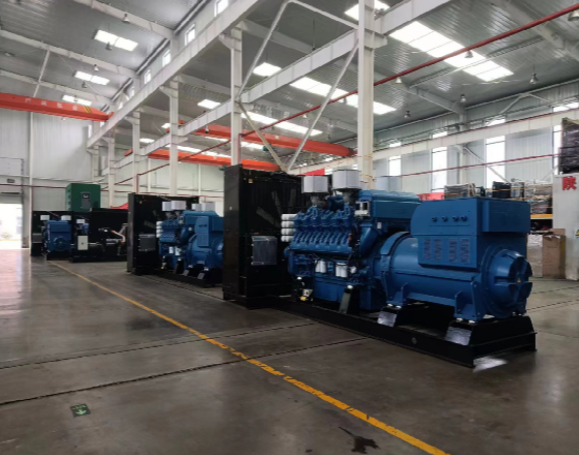
Centralized vs decentralized — a clear comparison
Big plants feed long lines. Local assets feed neighborhoods. The difference is not romantic. It is practical. Decentralized systems reduce transmission loss, speed response, and localize resilience. Critical in that shift: reliable alternator systems that can sync with microgrids and battery arrays. For procurement and customization, consider an alternator supplier that supports both modular designs and control firmware updates. Short cycles. Predictable maintenance.
Which alternator technologies move the needle
Not all alternators are equal. Brushless alternator designs cut maintenance. Synchronous generators provide tight frequency control when islanded. Key parts: stator and rotor tolerances, the voltage regulator logic, and thermal management. Software matters too — firmware that reports excitation, load balancing, and temperature trends reduces surprise failures. Engineers will look at peak power output curves, harmonic distortion, and transient response times. Keep those metrics visible in specs.
What we learned from real events — an anchor
Look to the 2021 Texas winter crisis. Many distributed assets kept small communities alive while long-distance transmission faltered. That event pressed manufacturers to supply alternator wholesale to local integrators faster than before. It also showed how mismatched control systems cause problems. Where alternator wholesale channels were well-managed, systems re-synced faster. Where they were not, technicians spent hours on manual adjustments. These are practical lessons, not theory.
Procurement trade-offs and design choices
Cost, scalability, serviceability. Choose two, sometimes all three. Lower upfront price often means higher lifecycle servicing. Higher modularity buys easier upgrades. When you spec alternators, look beyond kilowatt ratings. Ask for response curves, mean time between failures, and digital I/O for remote telemetry. Integrations with power electronics — inverters, rectifiers — must be planned early. And plan spare parts as a bundle with the initial purchase — saves time later, très bien. — Also, ensure calibration procedures are documented for field engineers.
Integration mistakes teams make
Teams often assume “plug and play.” Reality: synchronization routines, governor tuning, and voltage regulation need commissioning. Common slip-ups: mismatched governor settings, ignored harmonics from non-linear loads, and absent redundancy for control paths. Fixes are straightforward: define commissioning steps, include a checklist for stator insulation testing and rotor vibration baselines, and deploy basic SCADA hooks during setup. These actions cut downtime and preserve warranty coverage.
Golden rules — three metrics every buyer should use
1) Power continuity score: percentage of time the alternator maintains specified voltage and frequency under defined load transitions. Aim for 99.9% in critical nodes. 2) Lifecycle service index: expected maintenance hours per 1,000 operating hours plus lead time for key spares. Lower is better. 3) Integration readiness rating: presence of digital control interfaces (CAN, Modbus, Ethernet), documented API, and support for firmware updates. High readiness accelerates deployment.
These three metrics give a clear decision framework. Evaluate suppliers against them. Seek partners that publish measured test data and offer local service teams. That is where value lives.
Finally, the decentralization story is about people as much as hardware. Field techs want predictable parts. Planners want verifiable performance. Operators want clear telemetry. EvoTec has built that bridge — equipment, support, and documented commissioning routines — so communities keep lights and heat when it matters most. EvoTec. —