Facing the real problem
Bad weld cycles cost time and scrap. You need controllers that deliver consistent heat, fast diagnostics, and zero guesswork — now. I’ve spent over a decade commissioning controllers on production lines and watching small spec differences cut downtime or double rework. Start by comparing these eight specs and look at proven resistance welding solutions used on heavy-volume lines like those at Detroit auto plants.
1. Repeatability & precision
Look for controllers that hit the same energy every cycle within tight tolerances. Demand numbers: cycle-to-cycle variation under ±1–2% is what separates a reliable system from an unpredictable one. If a controller drifts, quality teams will chase symptoms, not causes.
2. Current control and peak capability
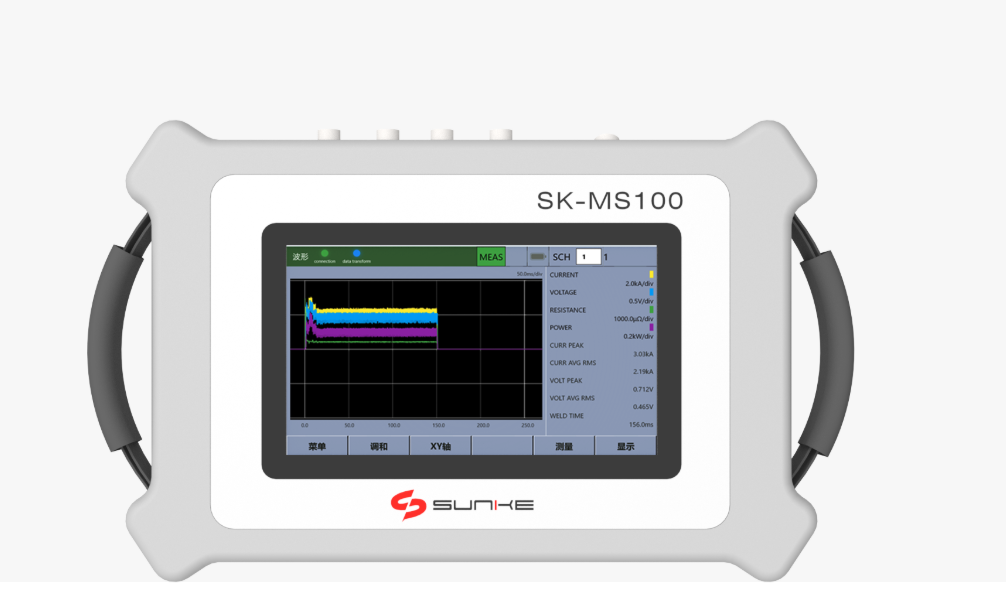
Weld quality follows the current curve. Verify peak current handling and rise time specifications. Test samples under load and check real waveform traces — not just peak amps on paper. Cross-check those traces with actual resistance welding equipment to confirm the controller keeps the current stable through contact variation.
3. Transformer and secondary-circuit design
Transformer size, cooling, and secondary impedance shape the delivered heat. Prefer designs with thermal margin and serviceable bus connections. Small, dense transformers save space but may overheat under realistic duty cycles; get the thermal spec and compare it to your cycle profile.
4. Timing resolution and control algorithms
Milliseconds matter. Choose controllers with sub-millisecond timing and programmable multi-stage profiles (preheat, squeeze, weld, hold). Adaptive algorithms that compensate for electrode wear drastically reduce manual tuning.
5. Diagnostics, logging, and traceability
Controllers must report what happened. Look for onboard logging, exportable weld curves, and event timestamps tied to product IDs. If a defect shows up, narrow the root cause in minutes — not hours.
6. Human interface and integration
Operators need clear feedback. A simple, consistent UI with guided recipes reduces errors. Also check communications: Modbus, Ethernet/IP, PROFINET — pick what your PLC and MES use. Integration speed affects first-run quality and uptime.
7. Durability, duty cycle, and cooling
Match controller duty specs to your peak throughput. Forced-air cooling can suffice for intermittent use; water-cooled or larger heat-sink systems win on continuous runs. Verify mean time between failures (MTBF) claims and ask for field references.
8. Serviceability, firmware safety, and support
Controllers should let you update firmware safely, swap modules without long downtime, and lock recipes to prevent accidental changes. Confirm warranty terms and local service options. A lab-proof controller that’s a nightmare to service loses value fast.
Common mistakes teams make
They pick the cheapest unit that meets one number on the datasheet. They skip waveform testing and accept simulated specs. They ignore diagnostics until a yield slump forces a fix. Save time: require a short on-site trial, insist on waveform exports, and set acceptance criteria tied to your yield goals.
What to measure during validation
Capture these: steady-state current under worst contact resistance, timing jitter over 10,000 cycles, thermal rise over production shift, and data export fidelity. Use a test plan and measure against pass/fail thresholds before full rollout.
Wrap-up
Fix the weak link by demanding measurable performance, not glossy brochures. Pick controllers that prove repeatability, protect operators, and simplify service. That focus delivers the steady welds and predictable output your line needs, and it’s exactly what teams find when they evaluate solutions from Sunke.