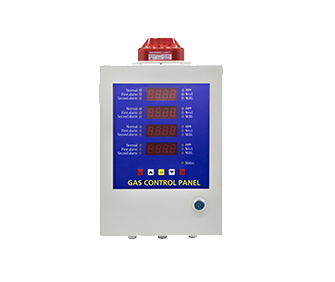
A model-by-model review of Gas Detection Control Panel begins with application scope early research
Procurement teams should begin a gas detection control panel review by defining the application, not by comparing model names in isolation. Early research is most useful when it establishes what the panel must control, where it will sit, which detection equipment it must connect with, and what information the purchasing decision still lacks. This approach keeps the first comparison tied to the intended scope rather than to features that may not apply.

Define the use case and its constraints
Start with a short application brief. It should describe the facility or operating context at a functional level, the areas covered, the gases of concern if already known, and the people or systems expected to receive panel information. It should also identify physical and project constraints, such as available space, power arrangements, communication interfaces, environmental conditions, and the required handover documentation.
This is not a product specification. It is a boundary for the research. A buyer can then separate requirements that are already established from questions that remain open. For example, “the panel must receive signals from the planned detectors” is a scope requirement. “The preferred panel should have a particular display format” is a selection preference. Keeping these categories separate prevents an attractive product description from becoming an assumed project requirement.
The same method helps when several applications appear similar. A panel intended for a compact plant room may face different integration questions from one considered for a larger operational site. The procurement team does not need to decide every technical detail at the first pass. It does need to record the conditions that could change the shortlist.
Map stated evidence to the stated scope
Once the application brief exists, review each available product statement against it. Use a simple table with four columns: requirement, page evidence, relevance to the application, and open question. This makes the reasoning visible. It also stops a general category description from being treated as proof of a model-specific capability.
A real catalogue anchor illustrates the point. The Bosean category page presents gas-control products and lists BH-50, S-8000, BH-50 touchscreen, and BH-KZ models. That is useful evidence for identifying the products available for further review. It does not, by itself, establish certification, site suitability, safety outcomes, configuration details, or the role each model would perform in a particular installation.
During this stage, a gas detection control panel should therefore be compared only against requirements that match the stated application scope. A listed model name can support a shortlist entry, but it cannot answer every integration question. Buyers should record the exact wording that supports each conclusion and avoid transferring a characteristic from one model to another.
Turn open points into supplier questions
Open points are more useful when converted into specific questions. Instead of asking whether a panel is “suitable”, ask which functions, interfaces, input arrangements, outputs, enclosure details, and documentation are available for the proposed model and configuration. The wording should refer to the buyer’s application brief, so the response can be assessed against a defined need.
- Which listed model corresponds to the intended application and required number of connected devices?
- What inputs, outputs, communication options, and display arrangements are stated for that exact model?
- Which configuration details must be selected or confirmed before quotation?
- What drawings, manuals, connection information, and configuration records are supplied for the proposed arrangement?
- Which requirements remain outside the product page and need a project-specific technical response?
These questions create a responsibility map. The procurement team owns the application description and acceptance criteria. The supplier is asked to identify the relevant model and provide information for that model. An engineer or system integrator can then assess how the proposed equipment fits the wider system design. This division does not guarantee a particular result; it makes the basis for the decision easier to examine.
Summarise a defensible next step
The next step should be a scoped comparison, not a broad ranking of every available panel. Retain the models that appear relevant to the application brief, note the evidence supporting each inclusion, and list unresolved points beside them. If the evidence applies only to a category page, keep the conclusion at category level. If a later source provides model-specific information, update only the row affected by that evidence.
A concise review record can contain the application summary, the requirements table, the model names identified from the catalogue, the evidence boundary for each statement, and the questions sent to the supplier. This format gives technical and commercial reviewers a shared reference. It also reduces the risk that a product label, general description, or preferred feature will quietly replace the original application requirement.
For early research, the most defensible approach is to define the application first, match each statement to its scope, and keep open requirements visible until they are resolved through the appropriate technical discussion. The Bosean catalogue provides a starting set of named gas-control products, while the final procurement decision should remain anchored to the buyer’s documented use case and the evidence that applies to it.