Problem: Money leaking where trackers should plug holes
Yo — fleets ain’t broke ’cause of one thing; they’re bleeding cash in tiny cuts: wasted miles, idle engines, insurance claims, and messy incident reviews. Too many outfits add trackers and expect miracles. Real fixes need video plus smart data. That’s why when you audit hardware choices you gotta check stuff like AI MDVR and integrated mobile dvr for vehicles setups for reliable video + telematics. I learned that straight-up in a Los Angeles transit project where raw footage turned disputed claims into closed cases fast.
Pinpoint the problems first — don’t buy tools you don’t need
Start with a problem list. Know the leaks before you count savings:- Safety: near-misses and accident disputes that cost time and premiums.- Productivity: wasted driver hours from bad routes or idling.- Compliance: hours-of-service and regulatory gaps that bring fines.- Evidence: lack of usable video when incidents happen.Match tracker features to those exact issues. If video isn’t solving your disputes, that camera box is just weight.
Core ROI framework — measure what moves the needle
Use a short, repeatable formula: baseline current costs → measure change after deployment → annualize gains. Focus on few high-impact metrics:- Fuel spend per vehicle per month.- Average daily idle time.- Incident rate (claims per 100k miles) and average claim cost.- Overtime or route-hours saved.Estimate savings conservatively. Example method: multiply reduced incidents by average claim cost, add fuel saved from lower idling, subtract subscription and hardware amortized across expected lifespan. Keep calculations tight and test with a pilot crew before scaling.
Operational value beyond dollars — time, clarity, and trust
Monetary ROI matters, but this tech also cuts administrative time and speeds decision-making:- Faster incident resolution with timestamped footage.- Better coaching thanks to event clips.- Clearer dispatch decisions from live location + video.Track these as time savings: how many hours per month saved in claims handling or driver coaching. Time equals money — but it’s also about smoother ops.
How to vet devices and integrations — practical checklist
Don’t get dazzled by specs. Test for these real things:- Recording reliability: continuous vs event-triggered; check loop behavior.- Sync: video timestamps must match GPS logs precisely.- Network behavior: how it uploads over 4G; what happens on weak signal.- Edge intelligence: does the unit flag collisions or run basic object detection?- Storage & retrieval: how easy is evidence export for legal use?Run a week-long pilot on a few vehicles. Push the tech with real routes and night drives. If downloads take days, it’s a pain in operations.
Common pitfalls crews trip on
Watch these traps:- Over-collecting data without a plan — clips pile up and nobody reviews them.- Bad installs — loose cameras, poor angles, messy wiring.- Privacy blowups — drivers need clear policies and consent handling.- Relying on cloud-only storage where uploads drop during outages.Plan for maintenance, retention rules, and driver buy-in before you roll out full fleets.
Alternatives and what they actually buy you
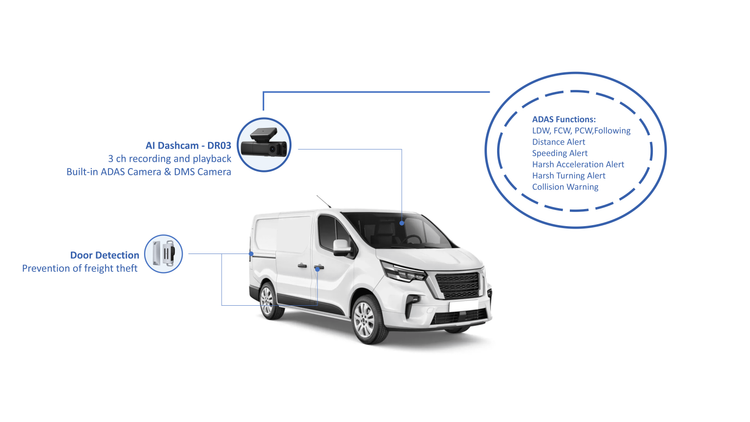
Choices break down clean:- Basic GPS trackers: cheap, fine for location and simple telematics, not for incident proof.- Dashcams alone: good for video but needs sync to GPS for context.- AI-enabled MDVR: combines video, event detection, and telematics — best for dispute resolution and automated alerts.If your pain is insurance claims or safety coaching, lean toward integrated video + telematics. If you only need route tracking, keep it simple and cheap.
Final take — pick what fixes your real problems
Be blunt: buy what closes your biggest leaks, not the shiniest toy. Run a focused pilot, measure fuel/incident/time gains, and lock in maintenance and privacy rules. When the goal is fewer disputes and faster ops, the tools that blend clear footage with accurate GPS win — and that’s the practical reason fleets shift toward integrated solutions like the ones BSJ builds into systems you can actually depend on.